Solo ET – Future of Solo Focused Technology!
Solo ET is a modern technology concept focused on individual-centered automation and personalized digital systems. It empowers solo users with smart tools, digital independence, and optimized workflows for productivity.
In the modern digital era, technology is shifting from large-scale systems to personalized, individual-centric solutions. One emerging concept that reflects this transformation is Solo ET. Although the term is relatively new, it has gained attention in technology discussions, business automation, digital workflows, and personalized productivity tools.
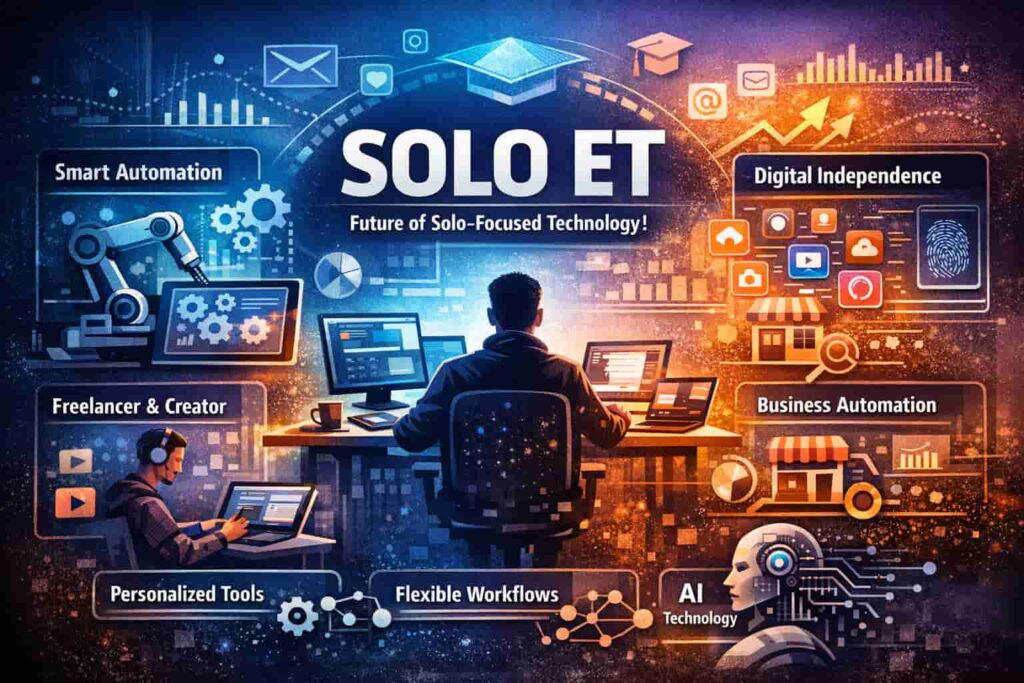
Unlike traditional systems designed for teams or organizations, Solo ET technology focuses on empowering individuals with smart automation, digital independence, and personalized tools.
What Is Solo ET?
Solo ET is a modern technological concept that emphasizes individual-focused digital systems and automation tools. The term represents a shift from collaborative or enterprise-level technology to solutions designed for solo users.
In simple words, Solo ET refers to:
- Personalized technology for individual users
- Smart automation designed for solo workflows
- Digital systems that enhance independent productivity
- Tools that support self-directed technology and decision-making
Unlike traditional technology models that prioritize organizational efficiency, Solo ET prioritizes personal efficiency, autonomy, and digital independence.
Meaning and Definition of Solo ET
Literal Meaning
The phrase “Solo ET” combines two conceptual ideas:
- Solo: Individual, independent, or self-directed
- ET: Emerging Technology or Enhanced Technology
Together, Solo ET can be interpreted as technology designed to empower individuals through automation and personalization.
Conceptual Definition
From a conceptual perspective, Solo ET can be defined as:
A technological framework that enables individuals to manage tasks, workflows, and digital processes independently using smart automation and personalized digital tools.
This definition aligns with modern trends in AI tools, productivity technology, and personalized digital solutions.
Origins and Evolution of Solo ET
Digital and Technological Roots
Unlike traditional technological concepts, Solo ET did not originate from classical engineering or academic research. Instead, it emerged from:
- Digital transformation trends
- AI-powered automation tools
- Personal productivity systems
- Freelance and solo entrepreneurship growth
As individuals increasingly rely on digital tools rather than large organizational systems, the concept of Solo ET naturally evolved.
Evolution Over Time
The evolution of Solo ET can be divided into stages:
- Early Stage: Tools designed for individual productivity
- Automation Stage: Integration of AI and smart workflows
- Personalization Stage: Customized digital systems for users
- Modern Stage: Solo-focused technology ecosystems
This evolution reflects the broader shift toward personalized technology and digital independence.
Key Features of Solo ET
Solo ET stands out because of its unique characteristics that differentiate it from traditional digital systems.
- Personalized Technology: Solo ET systems adapt to individual preferences, workflows, and goals. Unlike generic tools, they provide customized experiences tailored to each user.
- Smart Automation: Automation is a core feature of Solo ET. It enables users to automate repetitive tasks, optimize workflows, and improve productivity without relying on teams.
- Digital Independence: Solo ET empowers individuals to operate independently using digital tools. This feature is particularly valuable for freelancers, creators, and solo entrepreneurs.
- Flexible Workflows: Solo ET systems are designed to adapt to different working styles, making them suitable for various industries and personal use cases.
- AI and Data Integration: Many Solo ET systems integrate AI tools, data analytics, and machine learning to enhance decision-making and performance.
Benefits of Solo ET
The rise of Solo ET is driven by its practical advantages for individuals and businesses.
- Increased Productivity: By automating tasks and optimizing workflows, Solo ET significantly boosts individual productivity.
- Cost Efficiency: Solo ET reduces dependence on large teams and expensive enterprise systems, making it cost-effective for individuals and small businesses.
- Enhanced Creativity: With routine tasks automated, users can focus on creative and strategic activities.
- Scalability: Solo ET systems can scale with user needs, allowing individuals to expand their digital capabilities without complex infrastructure.
- Improved Work-Life Balance: By streamlining workflows, Solo ET helps individuals manage time more effectively, contributing to better work-life balance.
Applications and Use Cases of Solo ET
Solo ET is not limited to a single industry. Its applications span multiple fields.
- Digital Marketing and Content Creation: Solo ET tools help marketers and creators automate content scheduling, SEO analysis, and audience engagement.
- Freelancing and Remote Work: Freelancers use Solo ET systems to manage projects, automate client communication, and streamline workflows.
- Business Automation: Small businesses leverage Solo ET technology for customer management, data processing, and operational optimization.
- Education and Learning: Solo ET platforms support personalized learning paths and self-directed education systems.
- Creative Industries: Writers, designers, and artists use Solo ET tools to enhance creativity and manage digital workflows efficiently.
Business and Technology Impact of Solo ET
Transformation of Business Models
Solo ET is reshaping traditional business models by enabling individuals to operate as independent digital entities. This shift is particularly evident in:
- Gig economy platforms
- Creator economy
- Remote work ecosystems
Role in Digital Transformation
Solo ET plays a significant role in digital transformation by promoting:
- Personalized digital systems
- Automation-driven productivity
- Individual-centric technology
Competitive Advantage
Businesses that adopt Solo ET principles can gain a competitive advantage by empowering employees and reducing operational complexity.
Why Solo ET Is Trending?
Several factors contribute to the growing popularity of Solo ET.
- Rise of Individual-Centric Technology: Modern users demand technology tailored to their personal needs rather than generic systems.
- Growth of AI Tools: The rapid development of AI tools has accelerated the adoption of Solo ET systems.
- Freelance and Creator Economy: The expansion of freelancing and content creation has increased the demand for solo-focused technology.
- Digital Independence Movement: Many individuals seek digital independence from traditional organizational structures, making Solo ET an attractive concept.
- SEO and Online Visibility: As more websites discuss Solo ET, search interest continues to rise, further fueling its popularity.
Advantages of Solo ET vs Traditional Systems
| Aspect | Traditional Systems | Solo ET |
| Focus | Organizational efficiency | Individual productivity |
| Automation | Limited personalization | Smart automation |
| Flexibility | Rigid workflows | Flexible workflows |
| Cost | High infrastructure costs | Cost-effective |
| Scalability | Complex scaling | Easy scaling |
| User Experience | Generic | Personalized |
This comparison highlights why Solo ET is emerging as a modern technological paradigm.
Risks and Limitations of Solo ET
While Solo ET offers numerous benefits, it also has limitations.
- Over-Reliance on Automation: Excessive automation may reduce human creativity and critical thinking.
- Technical Complexity: Some Solo ET systems require technical knowledge, which may be challenging for beginners.
- Data Privacy Concerns: Personalized systems often collect user data, raising privacy and security issues.
- Limited Collaboration: Solo-focused systems may not be suitable for large-scale collaborative projects.
Understanding these limitations is essential for effective implementation of Solo ET.
Real-World Examples of Solo ET
Example 1: AI Productivity Tools
Tools like AI assistants, workflow automation software, and personalized dashboards represent practical applications of Solo ET.
Example 2: Solo Entrepreneurs
Many solo entrepreneurs use digital tools to manage marketing, finance, and operations independently.
Example 3: Content Creators
Creators leverage automation tools to manage content distribution, audience analytics, and monetization.
These examples demonstrate how Solo ET operates in real-world scenarios.
Psychological and Cultural Impact of Solo ET

Psychological Impact
Solo ET influences how individuals perceive work and technology by promoting autonomy and self-reliance.
Cultural Impact
The rise of Solo ET reflects cultural shifts toward:
- Individualism
- Digital empowerment
- Flexible work lifestyles
This cultural transformation explains why Solo ET resonates with modern digital communities.
Future of Solo ET
The future of Solo ET looks promising as technology continues to evolve.
Emerging Trends
- Integration of advanced AI systems
- Hyper-personalized digital tools
- Expansion of solo-focused technology ecosystems
- Increased adoption in education and business
Long-Term Potential
In the long term, Solo ET may:
- Redefine productivity standards
- Influence future technology design
- Become a core element of digital culture
As digital transformation accelerates, Solo ET is likely to play a central role in shaping the future of technology.
FAQs:
1. What is Solo ET in simple words?
Solo ET is a technology approach designed for individual users rather than organizations. It combines automation, personalization, and smart digital tools to help people manage tasks, workflows, and decisions independently with greater efficiency.
2. How is Solo ET different from traditional technology?
Traditional technology focuses on teams and enterprises, while Solo ET prioritizes individual productivity. It offers personalized automation, flexible workflows, and digital independence, making it ideal for freelancers, creators, and solo entrepreneurs.
3. Why is Solo ET becoming popular?
Solo ET is gaining popularity due to the rise of AI tools, remote work, and the creator economy. People want personalized technology solutions that enhance productivity, autonomy, and digital control, which Solo ET effectively provides.
4. What are the main benefits of Solo ET?
The main benefits of Solo ET include increased productivity, cost efficiency, smart automation, flexible workflows, and improved work-life balance. It helps individuals optimize digital processes without relying on large teams or complex systems.
5. Where can Solo ET be used?
Solo ET can be used in digital marketing, freelancing, business automation, education, creative industries, and personal productivity. Its adaptable nature makes it suitable for various industries and individual digital workflows.
Conclusion
Solo ET represents the shift toward individual-focused technology in the digital era. By combining personalization, automation, and digital independence, it empowers individuals to manage workflows efficiently and creatively. Its applications across business, freelancing, and digital tools highlight its growing relevance. As AI and personalized systems continue to evolve, Solo ET is likely to shape future productivity models and redefine how individuals interact with technology in modern digital ecosystems.