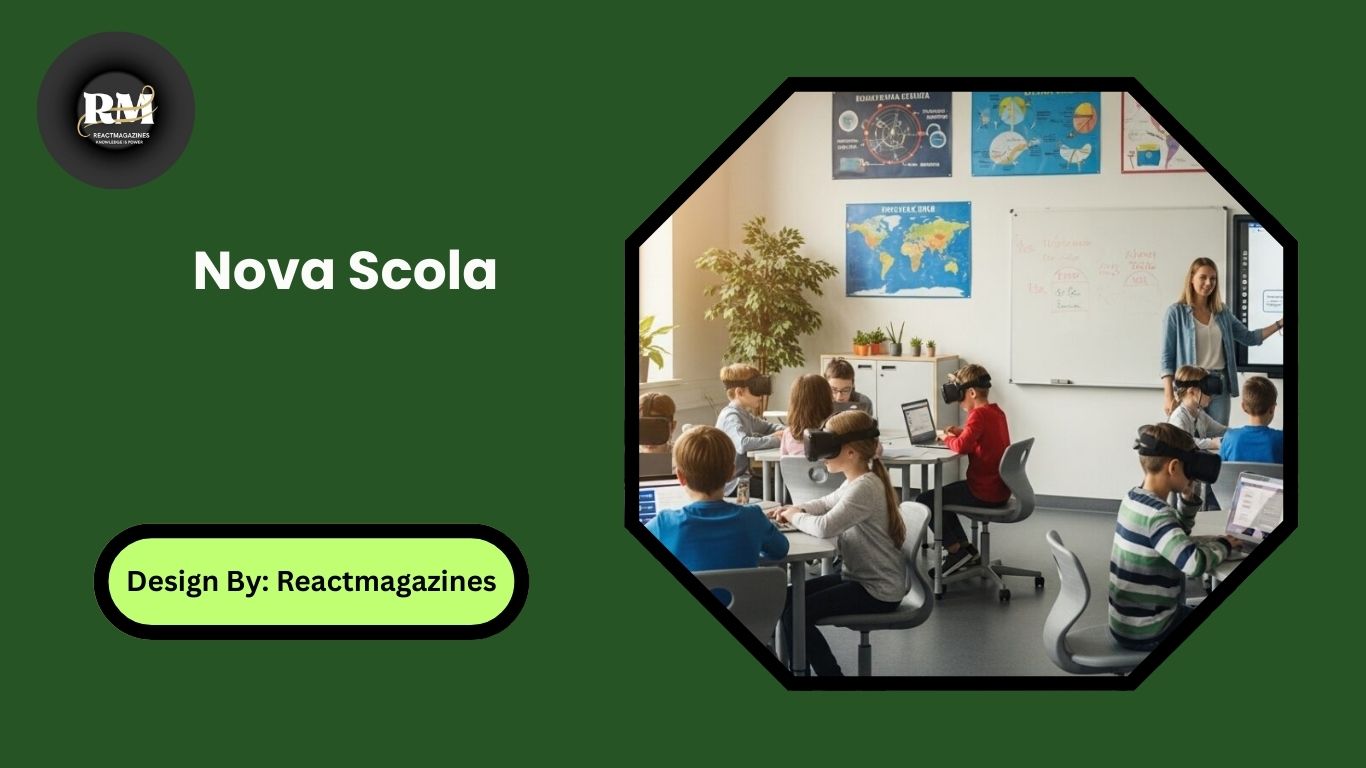
Nova Scola – New Era in Educational Innovation!
Nova Scola is an innovative, student-centered education model focused on personalized learning, adaptive curriculum, technology integration, and critical thinking, preparing students for 21st century careers and global challenges.
Education is evolving rapidly. Traditional classroom models are no longer enough to prepare students for a fast-changing world driven by technology, creativity, and global connectivity. This shift has given rise to innovative learning models, and one name increasingly gaining attention is Nova Scola.
Often described as a symbol of educational innovation, Nova Scola represents a modern learning model designed for 21st century education. It focuses on personalized education, student-centered learning, and adaptive curriculum structures that respond to the needs of modern learners.
But what exactly is Nova Scola? Why is it considered a revolutionizing force in education? And how does it differ from traditional schools?
Let’s explore everything in depth.
What is Nova Scola?
The term Nova Scola translates roughly to “New School,” but its meaning extends far beyond a literal definition. Nova Scola represents a modern educational framework built around innovation, creativity, and critical thinking in education.
Rather than following rigid, lecture-based systems, the Nova Scola learning model emphasizes:
- Student empowerment
- Interactive classrooms
- Project-based learning
- Experiential learning
- Blended learning environments
In essence, Nova Scola innovative education model for modern learners reimagines how knowledge is delivered, applied, and evaluated.
The Philosophy Behind Nova Scola

At its core, Nova Scola is grounded in a forward-thinking philosophy. It recognizes that:
- Students learn differently
- Skills matter as much as information
- Technology in education is unavoidable
- Creativity and critical thinking are essential
Instead of focusing only on memorization, Nova Scola promotes:
- Problem-solving
- Collaboration
- Real-world application
- Continuous assessment
This approach aligns closely with global education trends that prioritize adaptability over rote knowledge. The philosophy behind Nova Scola educational innovation rests on three pillars:
- Personalized Learning Journeys
- Adaptive Curriculum Models
- Holistic Skill Development
Key Principles of Nova Scola Education Model
To understand why Nova Scola matters in modern education, we must look at its core principles.
1. Student-Centered Learning
Traditional education often revolves around the teacher. Nova Scola flips that model. Students become active participants in their education.
They engage in discussions, projects, and real-world simulations instead of passively absorbing information. This student-centered education approach increases retention, motivation, and confidence.
2. Adaptive Curriculum
The adaptive curriculum used by Nova Scola adjusts according to student performance and interests. Instead of a fixed learning path, learners can:
- Explore deeper into subjects
- Receive additional support when needed
- Choose elective pathways
This flexibility prepares students for dynamic career landscapes.
3. Project-Based and Experiential Learning
Project-based learning is central to Nova Scola. Students work on real-world challenges, such as:
- Designing sustainable solutions
- Building business simulations
- Solving community problems
Experiential learning helps bridge theory and practice a major gap in traditional systems.
4. Technology Integration
Technology in classrooms is not treated as an add-on. It is embedded into the learning ecosystem. Nova Scola innovation includes:
- Digital collaboration tools
- Blended learning platforms
- AI-driven assessments
- Virtual simulations
This makes education both accessible and scalable.
How Nova Scola Differs from Traditional Schools?
One of the most searched queries is: What makes Nova Scola education unique and future-ready? Here’s a clear comparison:
| Traditional Schools | Nova Scola Model |
| Lecture-based | Interactive classrooms |
| Fixed curriculum | Adaptive curriculum |
| Exam-focused | Skill-focused |
| Memorization-driven | Critical thinking education |
| Limited technology | Fully integrated tech ecosystem |
Traditional systems often prepare students for exams. Nova Scola prepares students for life. This shift aligns with future learning approaches required in today’s competitive environment.
Innovative Learning Techniques Used by Nova Scola
The Nova Scola learning model incorporates several advanced teaching methods:
- Blended Learning: Combining in-person teaching with digital modules ensures flexibility and accessibility.
- Flipped Classrooms: Students review material before class and use classroom time for discussions and problem-solving.
- Collaborative Learning: Group-based projects encourage communication and teamwork skills.
- Inquiry-Based Learning: Students ask questions, research solutions, and develop independent thinking patterns.
These innovative learning techniques at Nova Scola for 21st century students build deeper understanding instead of surface-level memorization.
Emphasis on Creativity and Critical Thinking
Creativity and critical thinking are no longer optional skills. They are essential. Nova Scola encourages:
- Independent research
- Analytical reasoning
- Open-ended problem solving
- Innovation-based challenges
This creative learning framework helps students develop resilience and adaptability. Instead of asking, “What is the right answer?” Nova Scola encourages students to ask, “What are the possible solutions?”
Unique Learning Environment
The physical and digital environment in Nova Scola is designed to inspire engagement. Key features include:
- Flexible classroom layouts
- Collaborative spaces
- Digital resource centers
- Innovation labs
Such environments promote interactive classrooms that enhance learning outcomes.
Benefits of Attending Nova Scola
The benefits of Nova Scola education model are both academic and personal.
- Enhanced Engagement: Students feel ownership of their learning.
- Better Skill Development: Focus on communication, leadership, and digital literacy.
- Improved Problem-Solving Ability: Project-based systems strengthen analytical skills.
- Global Perspective: Exposure to global education trends prepares students for international careers.
- Career Readiness: Nova Scola emphasizes real-world applications, preparing students for evolving industries.
Success Stories and Student Impact
Though the model is innovative, the real proof lies in student success stories. Students educated under Nova Scola frameworks often demonstrate:
- Stronger presentation skills
- Better teamwork capabilities
- Higher adaptability
- Increased confidence
Employers increasingly value graduates who can think independently rather than simply follow instructions. Nova Scola education fosters exactly that mindset.
Core Characteristics and Impact
The core characteristics of Nova Scola innovation include:
- Holistic learning
- Personalized education
- Student empowerment
- Technology integration
- Community engagement
Its impact extends beyond academic achievement. It shapes future leaders who can navigate uncertainty. This paradigm shift in schooling reflects a deeper understanding of what education should accomplish.
Nova Scola in Practice
In practical terms, Nova Scola in practice may involve:
- Hybrid schooling models
- Community-driven projects
- Interdisciplinary subjects
- Real-time performance tracking
This applied learning structure ensures continuous improvement. Instead of yearly evaluations, assessment is ongoing and dynamic.
Course Offerings and Programs
Nova Scola-inspired institutions often offer programs in:
- STEM innovation
- Entrepreneurship
- Creative arts
- Digital literacy
- Social sciences
The focus is not only academic knowledge but also practical implementation. Such diversified programs reflect the needs of 21st century education.
Nova Scola Education Consulting
Some organizations adopt Nova Scola education consulting frameworks to transform traditional schools. Consulting services may help institutions:
- Redesign curriculum
- Implement blended learning
- Train educators
- Integrate adaptive learning systems
This demonstrates the scalability of the Nova Scola learning model.
Why Nova Scola Matters Today?
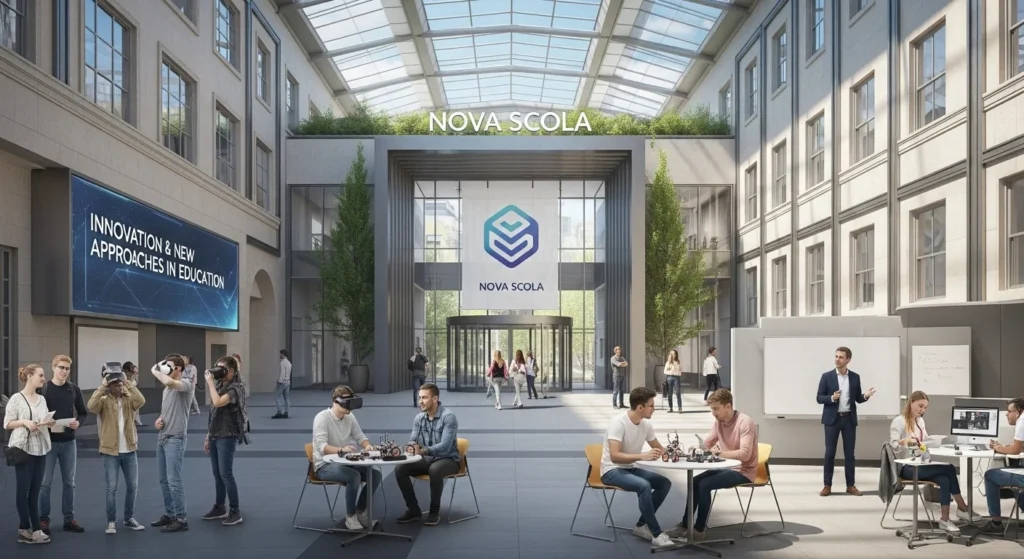
The modern world demands:
- Digital competence
- Cross-cultural communication
- Innovation
- Adaptability
Traditional education struggles to keep pace. Nova Scola innovation and new approaches in education address this gap directly. By combining personalized learning journeys with interactive classrooms, Nova Scola creates future-ready learners.
The Future of Education with Nova Scola
The future of education is not about replacing teachers with technology. It is about empowering educators with better tools. Nova Scola educational innovation envisions:
- AI-supported customization
- Lifelong learning ecosystems
- Global collaboration networks
- Competency-based progression
Education will become more flexible, accessible, and skill-oriented. Nova Scola is not just a concept it represents a global education shift.
FAQs:
1. What is Nova Scola in modern education?
Nova Scola is a modern educational framework that promotes student-centered learning, adaptive curriculum models, and project-based learning. It integrates technology in classrooms and focuses on creativity, critical thinking, and personalized education to prepare learners for future challenges.
2. How does Nova Scola differ from traditional schools?
Unlike traditional lecture-based systems, Nova Scola emphasizes interactive classrooms, skill-focused development, and experiential learning. It replaces memorization-driven approaches with critical thinking education, adaptive learning systems, and real-world problem-solving experiences for holistic development.
3. Why is Nova Scola considered educational innovation?
Nova Scola represents educational innovation because it integrates blended learning, AI-supported assessments, personalized learning journeys, and collaborative environments. It aligns with global education trends that prioritize adaptability, digital competence, and lifelong learning ecosystems.
4. What are the key benefits of the Nova Scola education model?
The benefits of Nova Scola include enhanced student engagement, improved problem-solving skills, leadership development, digital literacy, and career readiness. Its holistic learning approach prepares students for evolving industries and global opportunities.
5. Does Nova Scola use technology in education?
Yes, Nova Scola fully integrates technology through blended learning platforms, digital collaboration tools, AI-driven assessments, and virtual simulations. Technology is embedded within the learning ecosystem to enhance accessibility, flexibility, and scalability.
Conclusion
Nova Scola represents a paradigm shift in 21st century education. By combining personalized education, adaptive curriculum, project-based learning, and technology integration, it prepares students for real-world challenges rather than just examinations. Its focus on creativity, collaboration, and critical thinking reflects modern global education trends. As industries evolve and digital transformation accelerates, Nova Scola offers a future-ready learning model designed to empower students, support educators, and redefine educational innovation for generations to come.